
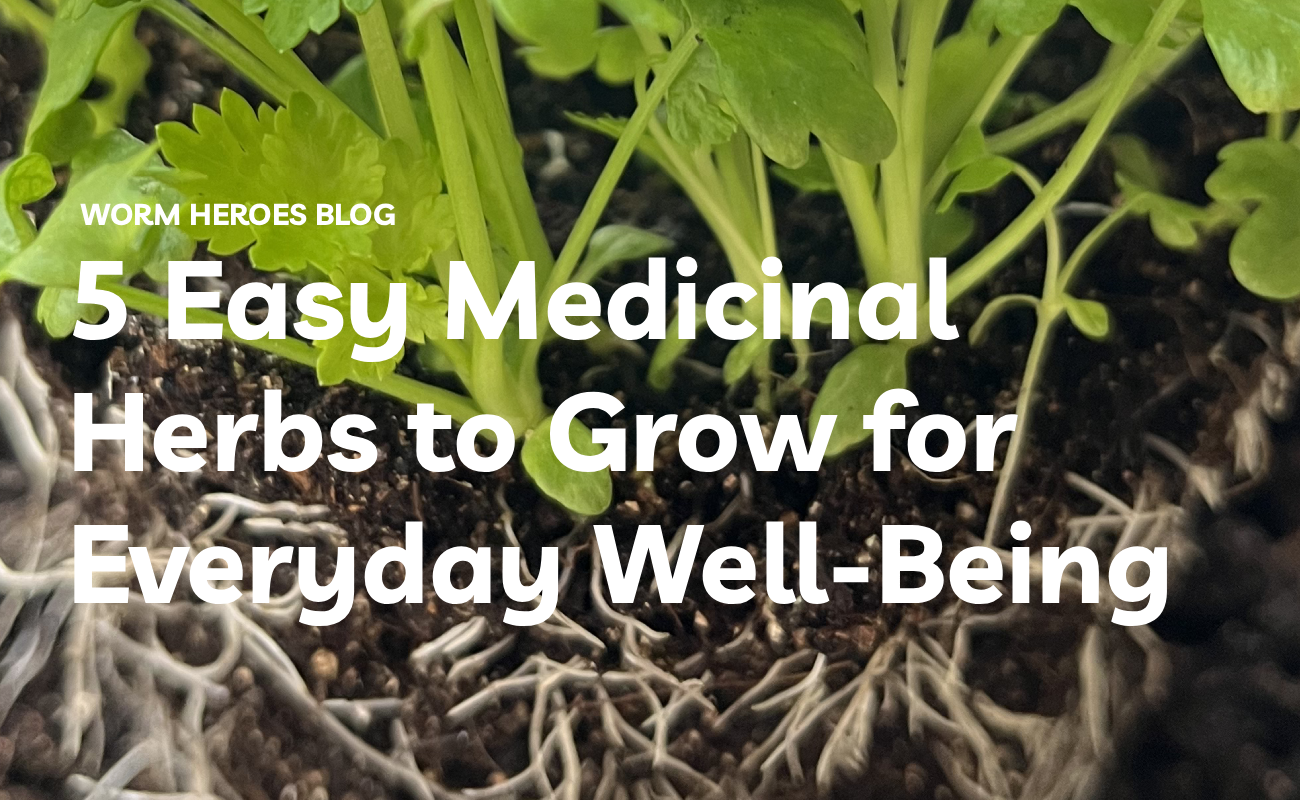
More and more people are turning back to the basics, and looking for gentler, more natural ways to support their bodies, calm their nervous systems, and take a little sovereignty over their health. Growing food is part of that shift. So is growing medicine. But it doesn’t have to mean complicated systems, expensive setups, or deep herbal knowledge to get started.
Herbs are the easiest place to begin. They’re resilient, forgiving, and incredibly generous. Many thrive in small spaces, pots, windowsills, or backyard beds, and they ask very little in return. With just soil, light, water, and time, you can grow plants that support digestion, sleep, immunity, stress relief, and everyday wellness—right where you live.
Gardening doesn’t have to be perfect or technical to be powerful. Sometimes, it starts with a single herb and the simple act of growing something with intention.
5 Easy Medicinal Herbs to Grow for Everyday Well-Being
Spring is the perfect time to start a small medicinal herb garden — even if you’ve never grown a herb before. You don’t need a big backyard or fancy equipment. The key is starting simple with herbs that are easy to grow, forgiving, and actually useful in everyday life.
Here are six of our favorite easy medicinal herbs to grow, with tips for beginners and suggestions for everyday use:
Chamomile (Matricaria chamomilla)
A classic for a reason, chamomile’s daisy-like blooms are easy to grow and harvest. A simple tea made from the flowers can help ease stress and support restful sleep. Chamomile thrives in modest soil and will reward you with continuous blooms through the season.
Active compounds: Apigenin, chamazulene, bisabolol — compounds known for their calming, anti-inflammatory, and digestive-support properties.

Growing tips: Chamomile is an annual that grows best from seeds. It prefers full sun and well-draining soil. Start seeds indoors for a head start or sow directly in containers or garden beds once the danger of frost has passed. Chamomile self-seeds easily, so it may return year after year in favorable conditions.
Medicinal use: Harvest flowers as they bloom. Use fresh or dried in tea for relaxation and stress relief. Chamomile can also be infused into oils for gentle skin care or added to bath blends.
Lemon Balm (Melissa officinalis)

Bright, citrusy, and uplifting, lemon balm helps calm the mind without causing drowsiness — perfect for busy mornings or mid-afternoon stress. Once established, it grows generously, making it ideal for teas, garnishes, or just brushing past in the garden for a refreshing scent.
Active compounds: Rosmarinic acid, citronellal, and flavonoids — known for calming, antiviral, and digestive benefits.
Growing tips: Lemon balm is a perennial that grows quickly from cuttings, divisions, or seeds. It spreads easily, so containers can help control it. Prefers partial to full sun and tolerates most soil types. Pinching back the plant encourages bushier growth.
Medicinal use: Harvest leaves throughout the growing season. Use fresh or dried in teas to calm the mind, soothe mild anxiety, or refresh culinary dishes. It can also be used in tinctures or infused oils for mild skin irritations.
Calendula (Calendula officinalis)
Sunny and cheerful, calendula isn’t just beautiful. Its petals are known for their skin-soothing properties and can be infused into oils or salves. Calendula is incredibly beginner-friendly and blooms reliably, adding both function and color to your herb garden.
Active compounds: Triterpenoids, flavonoids, carotenoids — known for skin-soothing, anti-inflammatory, and mild antimicrobial properties.

Growing tips: Calendula is an annual that thrives from seed. Sow directly in the garden or containers in early spring. Full sun and well-draining soil will encourage abundant blooms. Deadheading flowers prolongs flowering season. Calendula tolerates cool temperatures, making it a great early-season herb.
Medicinal use: Harvest petals as they open. Use fresh or dried in teas for digestive support, or infuse into oils and salves for skin care. Petals are also edible in salads and as garnishes.
Peppermint or Spearmint (Mentha × piperita / Mentha spicata)

Mint is practical and rewarding. It supports digestion, helps relieve tension, and gives a refreshing mental reset. Because it spreads quickly, mint does best in containers, where it can thrive without taking over the garden.
Active compounds: Menthol, menthone, flavonoids — supporting digestion, relaxation, and mental clarity.
Growing tips: Mint is a perennial that spreads aggressively via rhizomes so it’s imperative that you grow it in containers. Grows in full sun to partial shade and prefers moist, rich soil. Easy to propagate from cuttings or small divisions.
Medicinal use: Harvest leaves regularly. Use fresh in teas or salads, or dry for winter use. Mint is excellent for digestive support, headaches, and mild tension relief. Can also be infused into oils or syrups.
Holy Basil aka Tulsi (Ocimum tenuiflorum)
Holy basil is an adaptogenic herb, meaning it helps the body adapt to stress rather than sedating it. It supports daytime balance and mental clarity. Fast-growing, aromatic, and resilient, it does well in pots or garden beds and is enjoyable fresh or dried.
Active compounds: Eugenol, ursolic acid, apigenin — known for adaptogenic, stress-reducing, and immune-supporting properties.

Growing tips: Tulsi is a perennial in warm climates or grown as an annual in cooler zones. Seeds germinate well indoors; plant outside after frost. Prefers full sun and well-draining soil. Fast-growing and aromatic, Tulsi can be pruned to encourage bushy growth and prevent legginess. Thrives in pots or raised beds.
Medicinal use: Harvest leaves fresh or dry for teas to help the body adapt to stress. Can also be used in tinctures, infusions, or as a culinary herb in savory dishes for its unique flavor.
Start Where You Are
You don’t need a full garden or a long list of plants to begin. One herb is more than enough. Start with what you’re curious about or what your body keeps asking for—something calming if you’re stressed, something soothing if digestion feels off, or something aromatic if you simply want more life in your kitchen. Choose an herb you’ll actually touch, smell, harvest, and use.
When you grow just one plant with attention, you begin to notice its rhythms—how it responds to water and light, how it changes with the seasons, and when it’s ready to be harvested. That relationship is where the real medicine begins—not in quantity, but in connection.
Why Soil Health Matters
Herbs thrive in well-draining, nutrient-rich soil. For containers or raised beds, a simple mix of roughly equal parts garden soil, compost, and a light material like perlite, vermiculite, or coarse sand helps keep roots healthy and aerated. Most medicinal herbs prefer plenty of sun and soil that isn’t constantly wet; good drainage encourages stronger growth, better flavor, and more concentrated medicinal compounds.
To gently support soil health, you can mix in a small amount of worm castings. Naturally rich in nutrients and beneficial microbes, worm castings help improve soil structure, strengthen root systems, and support resilient, aromatic herbs over time. Many gardeners choose high-quality worm castings, like those from Worm Heroes, as a simple way to nourish soil without synthetic inputs.
Starting a medicinal herb garden isn’t about quick fixes. It’s about slowing down, tuning in, and supporting your well-being while watching something grow. This spring, start small, focus on easy medicinal herbs to grow, care for your soil, and see how a few simple plants can bring calm, flavor, and connection into your everyday life—one pot, one seed, one leaf at a time.