
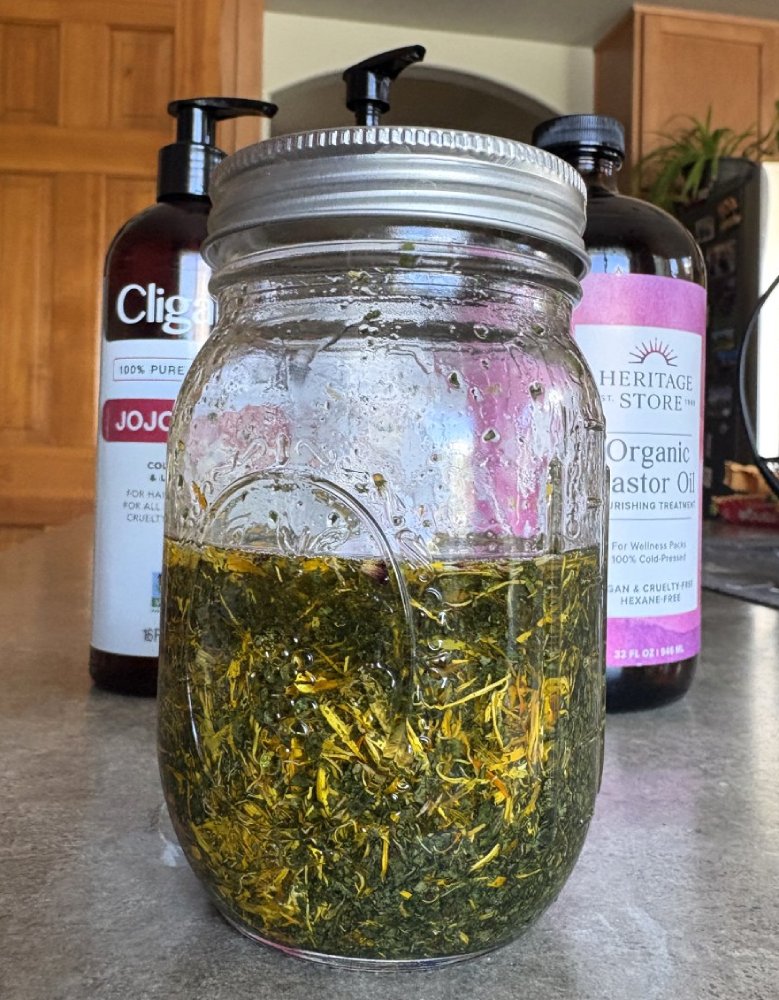
There’s something grounding about realizing how easy it is to make your own healing salve for dry hands. As a gardener, having a good-quality salve is important, and once you see you can make something powerful and clean with just a few simple ingredients, it changes the way you think about it.
When you work with herbs directly—whether you grow them yourself or source them from a local grower—the process starts to feel less like “making a product” and more like participating in a cycle: plant, harvest, infuse, use. A slow return to something more direct and less processed. It also means you can customize what you make with ingredients that are specifically important to you and your own needs.
And the best part? Making a salve doesn’t require perfection or special tools. Just plants you trust, and a willingness to work with them.

The Plants Behind This Powerful Healing Salve for Dry Hands
This healing salve for dry hands is built from a handful of plants commonly used in traditional herbal skin care, each contributing something slightly different.
- Calendula is the gentle foundation. It’s one of the most reliable skin-support herbs, especially for anything dry, irritated, or overworked. It calms redness, supports surface-level skin regeneration, and helps minor cuts, cracks, and abrasions recover. It brings softness and balance to the blend, making it suitable for daily use.
- Comfrey adds a deeper level of support. Traditionally used for skin repair, it’s especially valued for areas that feel cracked, worn, or slow to recover. It’s a powerful plant, and in this blend, it works best when paired with gentler herbs.
- Stinging nettle brings a mineral-rich, restorative quality. Often overlooked as a “wild” plant, nettle is deeply nourishing in its own way, supporting resilience and helping restore what’s been depleted over time. It’s rich in minerals like silica, calcium, and magnesium, which are associated with stronger, more resilient skin.
- Dandelion flower adds a subtle layer of support. It’s a simple, abundant plant that helps soften and calm the skin, especially when it’s irritated from sun, wind, or constant use. It doesn’t change the function of the salve as much as it rounds it out—making the blend feel a little more soothing and complete.
While calendula soothes and comfrey supports repair, nettle helps rebuild what’s been worn down, and dandelion softens the edges. Together, they create a powerful healing salve for dry hands that is simple, functional, and deeply supportive—without needing complicated formulations.tive—without needing synthetic additives or complicated formulations.
How to Make the Herbal Infused Oil

To begin, fill a clean glass jar about halfway to three-quarters full with dried herbs:
- 50% dried calendula flower
- 20% dried dandelion flower
- 10% dried comfrey leaf
- 20% dried stinging nettle leaf
Cover completely with oil. Jojoba oil works especially well because it’s stable and absorbs easily into the skin, though blends with coconut or a small amount of castor oil can add texture and depth. I usually make the following combo:
- 60% jojoba (for deep absorption)
- 20% coconut oil (for barrier + structure)
- 20% castor oil (for healing “pull” + richness)
Let the jar sit for 2–4 weeks, giving it an occasional shake. The goal is simply time—time for the plants to release their properties into the oil. Once infused, strain well (nettle’s tiny hairs can be irritating if left behind). What remains is the base of your healing salve for dry hands.
Turning Oil into Hand Salve
To transform the infused oil into a salve:
- Strain the infused oil and warm it gently in a double boiler.
- Add beeswax. A general ratio is about one cup of infused oil to two or three tablespoons of beeswax, depending on how firm you want it (2 tbsp → softer salve, 3 tbsp → firmer, more protective). Stir until fully melted.
- Optional: Add 1 Tbsp shea butter for added creaminess.
- Remove from heat. You can now add a few drops of essential oil (lavender works well, keep it light).
- Pour it into jars or tins and let it cool.

What you end up with is something simple, but powerful. I use mine before bedtime, so it works its magic overnight.
Benefits of This Herbal Salve
This is a practical, everyday salve—especially for hands that are constantly working in soil, water, or weather. It’s not just about immediate relief, though it helps with that too.
With regular use, this healing salve for dry hands helps:
- Rebuild dry, cracked skin from gardening, washing, or exposure
- Calm irritation after long days outside or repetitive hand use
- Support the skin’s natural barrier so it holds moisture better
- Leave a light protective layer without feeling greasy or heavy
Calendula and dandelion do most of the soothing work, comfrey supports repair, and nettle helps strengthen what’s been worn down over time.
It’s not about masking damage—it’s about helping your hands recover from the kind of work they’re actually doing.
A Few Grounded Notes
Use only dried herbs when infusing oil to avoid moisture and spoilage. Strain carefully, especially when working with nettle. And while comfrey is incredibly supportive for external skin repair, it’s best not used on deep or infected wounds due to how quickly it encourages surface healing.
Where Your Ingredients Come From Matters
One of the most meaningful parts of making a healing salve for dry hands is that you’re not locked into a system that’s disconnected from where things grow. You can harvest herbs from your own garden—plants you’ve tended, watered, and watched come back season after season. Or you can source dried herbs from local growers, keeping the relationship close to people who are actually working with the land.
Either way, the salve stays rooted in place and process, not packaging. It becomes something you made from what was already around you, not something removed from it.